
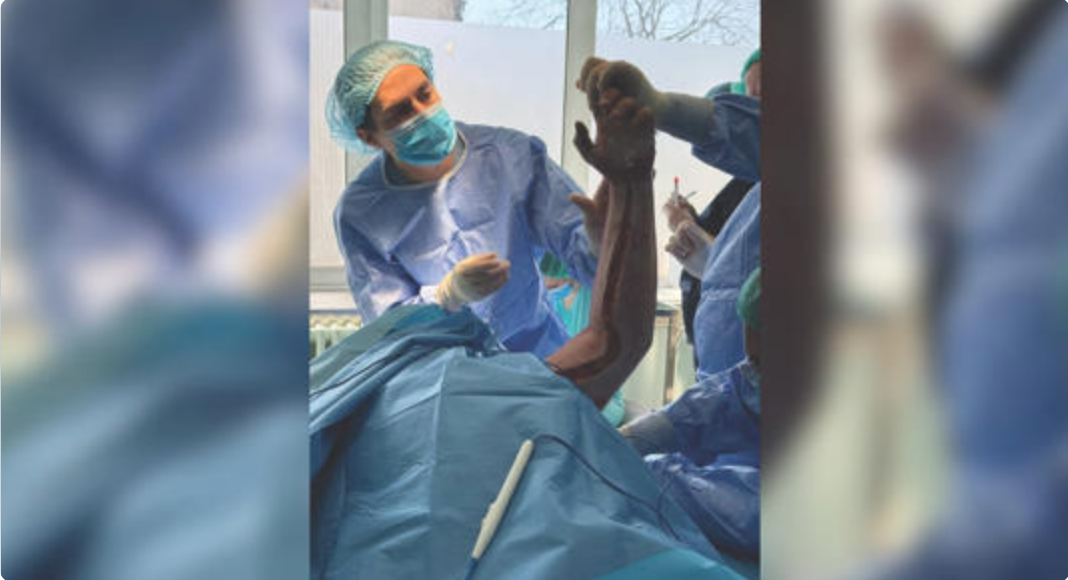
In the last two years, the skills and experience of plastic surgeons in Israeli medical centers have skyrocketed – making their prowess in this specialty among the best in the world.
But sadly, this occurred as a result of necessity, trying to heal and restore the normal function of the huge numbers of soldiers and civilians wounded on October 7, in ballistic missile attacks on the North and South, and during the war in Gaza.
The government has said that 20,000 Israelis have been wounded and injured at the hands of enemy terrorists since the heinous incursion of Hamas and other Palestinian terrorist groups on October 7.
It was trauma specialists in the hospital emergency rooms who first received wounded soldiers and civilians rushed there in helicopters and ambulances. There were many blast and shrapnel wounds. Only later, after their conditions stabilized, did the plastic surgeons take over, along with specialized nurses in burns units, pain specialists, occupational therapists, psychologists, and others, to try to restore the victims’ lives to a livable existence and be as normal as possible.
Dr. Gilad Spiegel, a senior plastic surgeon at Jerusalem’s Shaare Zedek Medical Center (SZMC) who deals especially in burns and skin ulcers in civilians and soldiers, told The Jerusalem Post that he and his colleagues “are used to seeing such scenes. It’s routine for us to see patients who always suffer from some pain, and the shock of their family members. It can take many months and even years for a satisfactory recovery.”
He added that Israeli plastic surgeons have a lot of experience, and “we have helped people in disaster areas around the world who need our help and expertise. On October 6, 2023 – the day before the Hamas incursion, a SZMC team led by our director-general, Prof. Ofer Merin, who is regularly sent by the Israel Defense Forces to lead such efforts, went to Armenia. There was an explosion that injured many. But when we learned of the horrific events that happened in the South, we rushed back to Israel. In the past year, we also sent a team to Macedonia, where there was a major fire in a factory that injured a large number of victims. Teams have also come to Israel to learn from us, but this has happened less after the Gaza war broke out,” Spiegel noted.
“Wounded soldiers were very well-cared for on the front by medics and paramedics when they lost blood – and some of the IDF’s emergency medical technicians were themselves killed or wounded when they rushed to help. Most wounded were brought by helicopter immediately – in less than half an hour from when they were wounded in Gaza – to our trauma center.”
There is a growing number of women who are plastic surgeons. It’s known that women are able to sew, embroider, and do other delicate work. There are outstanding women physicians who reattach fingers that have been amputated in accidents.
Asked to predict how his specialty would advance in five years, Spiegel said, “The technologies ahead will be amazing. Skin cells will be cultured to produce tissue from the patient himself without having to remove skin from an unharmed part of the body. Lasers will be used to reduce scars; robots will work on microscopic tissues; and artificial intelligence to plan surgeries will be used on a regular basis.”
DR. STAV SARNA CAHAN, who is the head of the burns unit at Hadassah University Medical Center in Jerusalem’s Ein Kerem, graduated from a six-year plastic surgery residency at Hadassah-University Medical Center. Then he completed a clinical fellowship in acute and reconstructive burn care management at Massachusetts General Hospital and pediatric burn care at the Shriners Hospital for Children in Boston; upon his return to Ein Kerem, he established a center to treat burn patients.
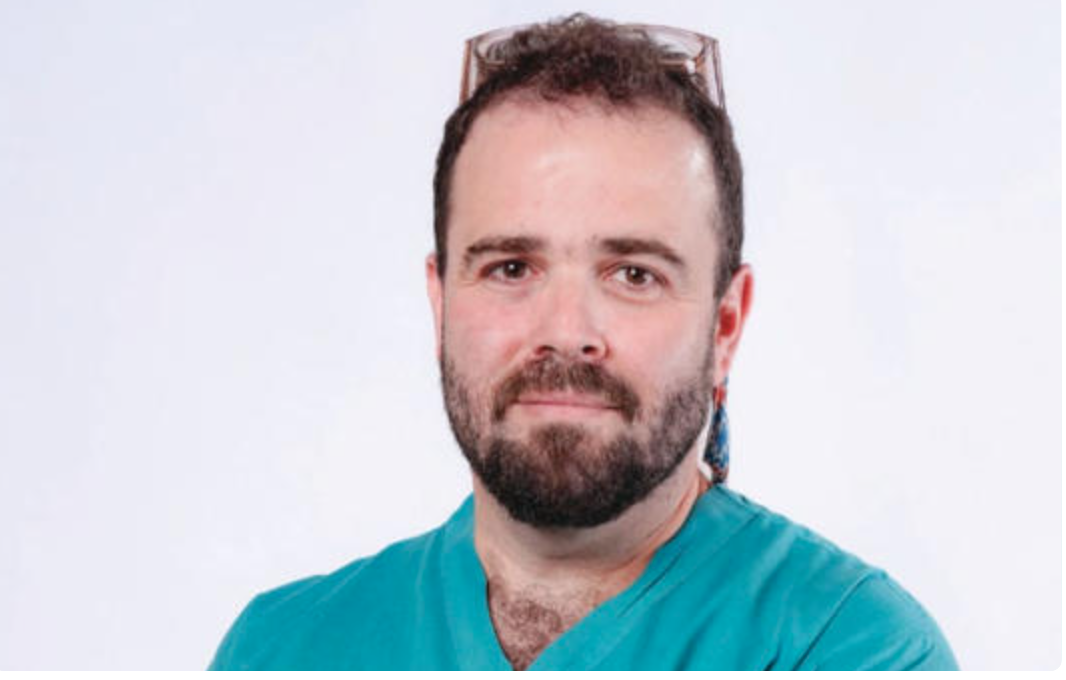
He isn’t the only member of his family to treat victims of trauma rushed to Hadassah. His wife, Dr. Lea Ohana Sarna Cahan, did a fellowship at Beth Israel Deaconess Medical Center in Boston when he was at Massachusetts General, and today is a pediatric attending physician at the same hospital as her husband. “She was a paramedic in the IDF, then studied medicine, and specialized in pediatric emergency medicine at Harvard University.”
Treating all types of injuries
He told the Post that his specialty treats all types of injuries – from orthopedics, trauma, and blood vessel damage to general surgery and burns. “We have treated hundreds of patients here in Jerusalem, mostly soldiers but also victims of October 7 in the southern border communities. We opened a special clinic at Hadassah Hospital on Mount Scopus to do follow-up with soldiers we treated. They come once a month for rehabilitation with occupational and physical therapy, plus psychological support.” The IDF has managed to reduce the severity and number of burns by supplying more fire-resistant clothing to soldiers, he added.
Sarna Cahan noted that when wounded soldiers are first brought in, they are “proud, full of energy from their mission at the front despite their sudden disability. But then time passes, and suddenly reality hits, and it’s hard for them. There is a lot of post-traumatic stress disorder that has to be treated. ”
A few decades ago, burns specialists and their nurses had to change bandages daily as the dead skin was debrided and skin from other parts of patients’ bodies or from Hadassah’s National Skin Bank healed, and it was excruciatingly painful. “Today, we do much less of this, thanks to new techniques.
“Today, when the patient doesn’t have enough skin to move to the site of wounds and burns, there are dermal substitutes made from beef or shark. Skin must be attached tightly with sutures or other means so it can heal, but not too tightly because if on the face, the patient has to eat, and the limb joint has to move. And there are always scars. No way has yet been found to completely eliminate them.”
Neither Hadassah nor SZMC uses the Brazilian technique of attaching skin from the tilapia fish to burns after debridement. “I saw it was tried in US hospitals, but I wasn’t enthusiastic. There, medical institutions have lots of money, so they try everything,” recalled Sarna Cahan. “I brought back to Hadassah what I thought would be game-changing.”
Article obtained from The Jerusalem Post.
Link: https://www.msn.com/en-us/public-safety-and-emergencies/general/treating-skin-deep-wounds-vital-work-of-plastic-surgeons-coping-with-gaza-war-victims/ar-AA1NSe5o?ocid=BingNewsSerp