
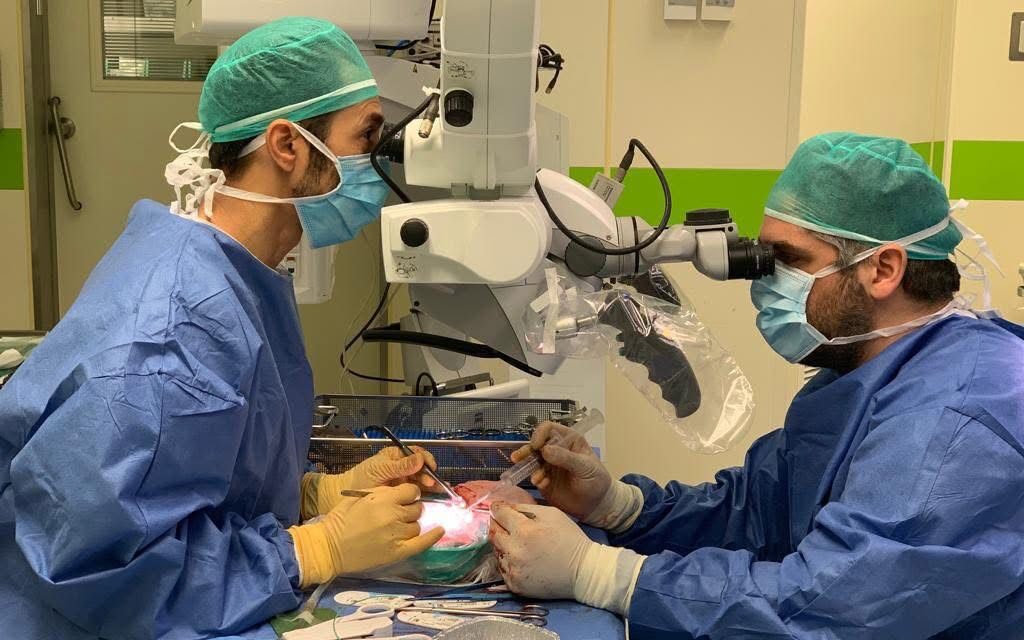
The surgery was performed as part of a marathon of liver and kidney transplants that took place during the holiday at Hadassah Ein Kerem.
Dr. Abed Khalaileh, Director of the Solid Organ Transplant Unit at Hadassah: “The patient would not have been able to undergo liver transplant surgery if it were not for the complex bypass surgery he underwent by the staff of the Department of Cardiothoracic Surgery. On the other hand, he would not have survived without the liver transplant. His life was saved in one night, in two different operating rooms.”
During the Sukkot holiday, at Hadassah Ein Kerem Hospital, a groundbreaking and unusual medical procedure was performed: a patient in his 40s underwent complex cardiac bypass surgery, and immediately afterward – that same night – underwent a life-saving liver transplant. This is an unprecedented event in Israel, conducted in only a few leading hospitals worldwide, requiring medical and logistical preparations and the highest level of team commitment.
The procedure took place as part of an intensive transplant marathon that lasted 24 hours, during which the lives of four patients were saved – two of whom underwent a liver transplant and two of whom underwent a kidney transplant.
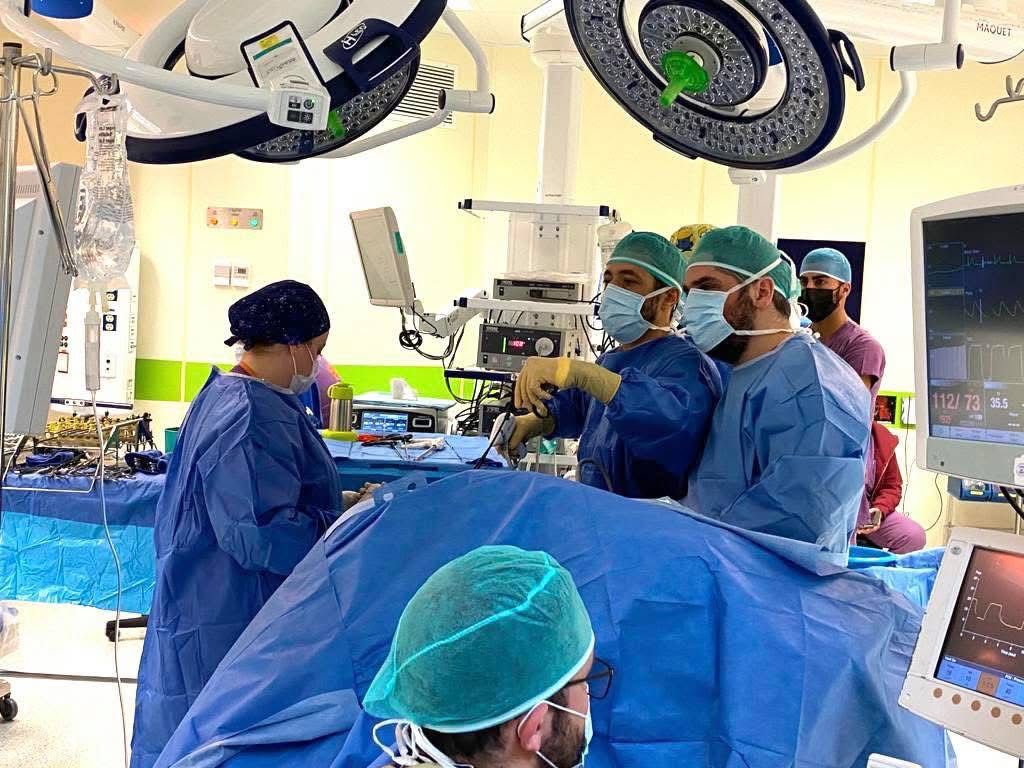
Dr. Abed Khalaileh, Director of the Solid Organ Transplant Unit at Hadassah, who led the complex operation, describes a very tense and intense day, which spread over several operating rooms, sometimes at the same time, as the team made its way from one operating room to another, completed a procedure, and hurried to prepare for the next procedure.
“Shneor, a patient in his 40s who first underwent bypass surgery would not have survived the liver transplant surgery without the bypass surgery, and on the other hand, would not have survived without the liver transplant. It was a courageous medical decision, based on rare international experience, and on top-notch medical teams. We decided that if it succeeded in a few cases internationally, we would succeed here as well, at Hadassah with our excellent staff.”
Shneor Kipgan (44), a married father of four from the community of Ofra, made medical history this week at Hadassah Medical Center. Kipgan, who suffered from liver cirrhosis, underwent a complex heart bypass surgery — followed, that very same night, by a life-saving liver transplant.
“I never thought my medical condition would reach such a stage,” Shneor said. “When they told me I needed a transplant, I was a bit scared — after all, it’s not a simple thing.”
Dr. Ashraf Imam, head of the Liver Transplant Service at Hadassah, explained that the cirrhosis from which Shneor suffered is a condition caused by a chronic illness that leads to scar tissue gradually replacing healthy liver cells, severely impairing liver function and posing a life-threatening risk.
In recent years, Shneor’s condition had deteriorated significantly. “He became very weak, and about a year ago we were told he needed a liver transplant,” recalled his wife, Shoshana, emotionally.
His medical situation grew even more complicated when, about a year ago, during routine tests conducted at Hadassah in preparation for the liver transplant, doctors discovered that Shneor was also suffering from blockages in his coronary arteries — and that he required immediate heart bypass surgery.
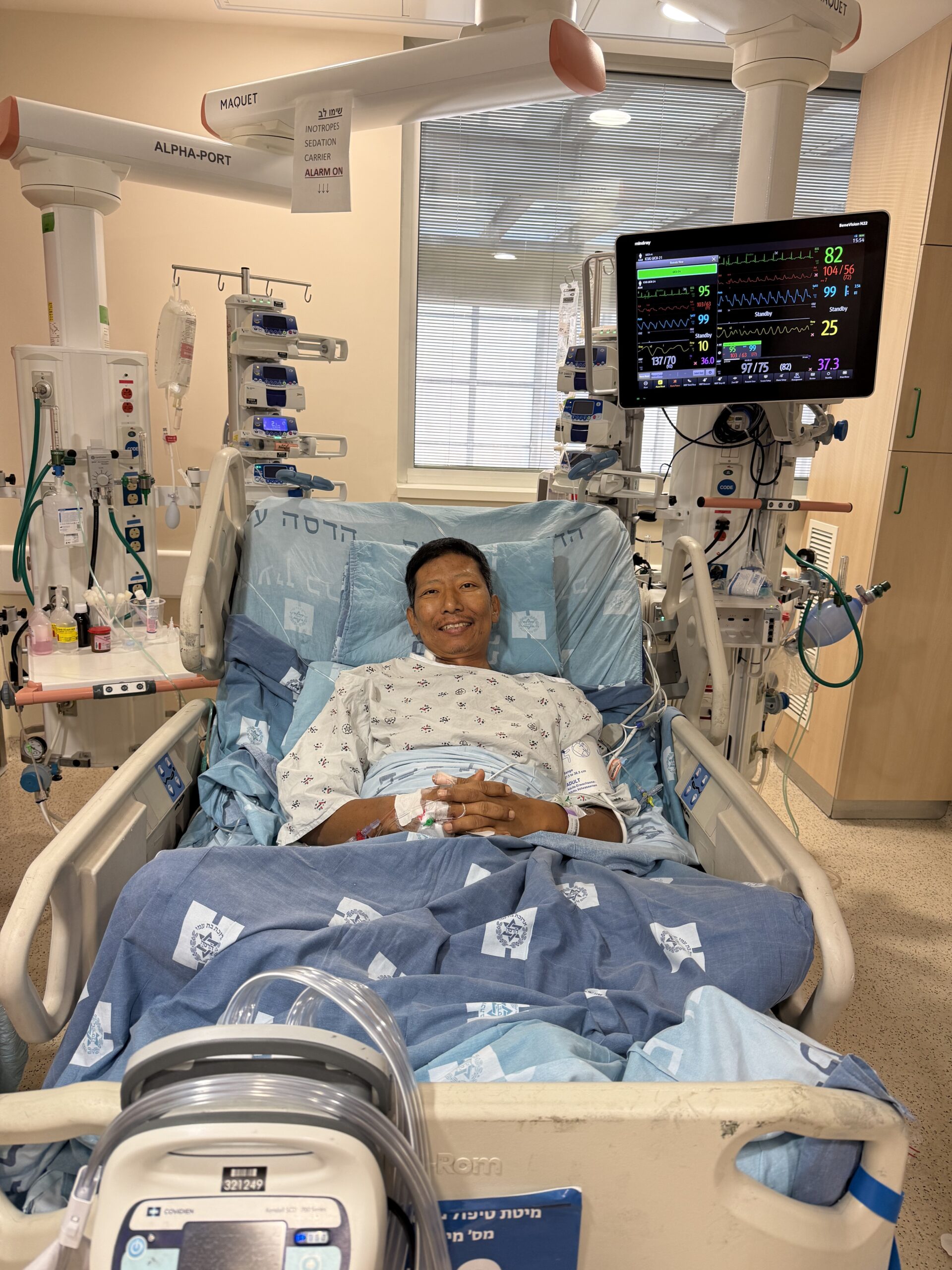
The cardiac surgery was performed by a team from the Department of Cardiothoracic Surgery led by Dr. Amit Korach, while a team of surgeons from Hadassah simultaneously performed liver harvesting surgery at Rambam Hospital. The liver was rushed to Hadassah; at 4:00 AM, following the completion of the complex cardiac bypass surgery, the successful transplant surgery began.
Dr. Amit Korach, director of the Department of Cardiothoracic Surgery at Hadassah, who led the bypass surgery, explains: “Shneor suffered from narrowing of the arteries that supply blood to the heart, a decidedly life-threatening condition, in which it is not possible to undergo a liver transplant before operating on his heart.
In bypass surgery, we actually take blood vessels from different parts of the body and bypass the blocked arteries. The fear of performing the two surgeries one after the other stems first and foremost from the fact that they are two major surgeries on a patient with severe liver failure. His liver is practically dysfunctional, including a severe impairment in the ability to produce blood clots and stop bleeding.”
Dr. Korach added that the need for heart surgery was discovered in a routine evaluation done before liver transplant surgery. “The decision to have a combined surgery was made in a multi-team discussion that included transplant surgeons, heart surgeons, cardiologists, anesthesiologists, and specialists in liver medicine.
Before the surgery, all the teams were meticulously prepared, including a list of “non-routine events and equipment” distributed among the surgeons about six months ago.
The main tension in advance of the surgeries stemmed from the unknown, since it is a combined surgery, which has been performed in very few cases around the world.”
The medical drama did not end there: the team of surgeons from Hadassah, who performed the liver harvesting at Rambam, then rushed to Assuta Hospital in Ashdod, where they performed another liver harvesting operation for another patient who was waiting for a life-saving transplant.
Indeed, at 8:00 a.m., the second liver transplant was performed at Hadassah, in the body of a 50-year-old resident of the north. Dr. Ashraf Amam, Director of the hospital’s Liver Transplant Service, said, “The process was so complex but worth all the effort to save lives and give patients renewed strength.”
Later in the day, the team also performed two kidney transplants: one in a 55-year-old woman who has been dealing with complex chronic diseases for years and the other in an 83-year-old man. All the transplants were performed in a total of 24 hours, requiring supreme effort and precise synchronization between all parties at Hadassah, the other hospitals, and on the country’s roads. The surgeries were completed successfully, and all the patients are satisfactorily recovering.
Dr. Abed Khalaileh concludes: “This was an unprecedented medical operation, which required perfect coordination between dozens of staff members – doctors, anesthesiologists, nurses, technicians, logistical staff, and the National Transplant Center. Four people were saved thanks to professional, dedicated, and precise work, carried out around the clock without stopping even for a moment. I am proud of our teams and thank everyone who took part.”