
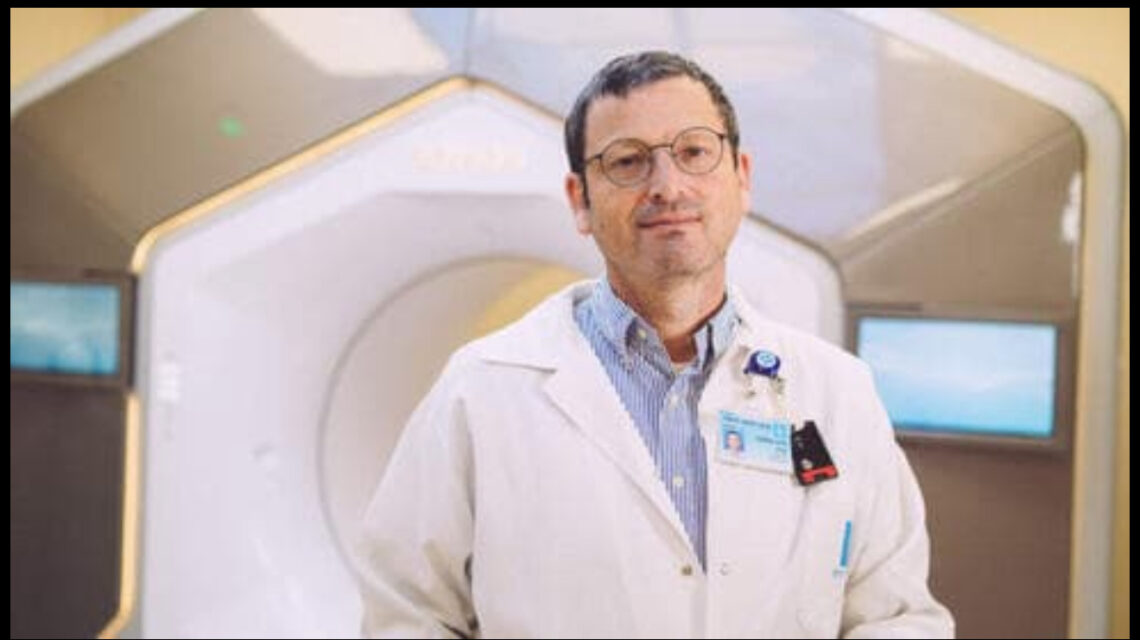
Despite the increase in academic boycotts against Israel, Hadassah’s Sharett Institute for Oncology has been awarded a prestigious research grant from the European Union.
The grant is part of the European Initiative for Innovative Health, a large-scale project involving more than 60 research, industry and medical institutions from Europe and the world.
As part of its research, the Hadassah team will integrate innovative tools to help identify heart problems caused by oncology treatments, detect risk signs in the body, and build personalized treatments for each patient. With the help of advanced technologies and artificial intelligence, doctors will be able to make more accurate and faster decisions, saving lives and improving the quality of those lives.
The Hadassah research team is headed by Prof. Aharon Popovtzer, Director of the Sharett Oncology Institute at Hadassah and includes Hadassah colleagues Prof. Dan Gillon, Director of the Department of Cardio-Oncology, Prof. Shai Rosenberg, Director of the AI Unit in Oncology and of the Computational Biology Laboratory of Cancer at Hadassah and Head of the Sagol Program for Computational Medicine at the Faculty of Medicine of Hadassah and the Hebrew University, as well as Dr. Josh Moss of the Department of Oncology and a Principal Investigator at the Hadassah Cancer Research Institute.
“We are in essence trying to figure out how to avoid cardiac toxicity in the new oncology treatments,” explains Prof. Popovtzer. “There are many treatments today that prolong life, and the quality of life of patients today is improving, thanks to progress in the field of medicine and treatment. For example, immunotherapy drugs, which activate the body’s autoimmune system against the tumor. Another example is biological drugs, which are based on each tumor’s unique biology. The great advantage of these drugs is that thanks to them we have the ability to help patients in a way that we couldn’t in the past.”
As part of the grant, the Sharett team will examine the biological and genetic mechanisms of the tumors and the patients themselves and will examine ways to improve protocols and prevent cardiac complications related to the oncology treatment in patients.
Prof. Popovtzer emphasizes that this is not just another research grant, but rather an extraordinary expression of the EU’s confidence in the scientific and clinical capabilities of Hadassah and Israel.
“It is very important to present, to explain, to show that the State of Israel is a developed and advanced country, to show the world that there is much more to it than conflicts” he adds.
“In this respect, receiving this major grant gives a great boost to the entire research team, and to the entire Hadassah Hospital. This is a significant step not only for our patients, but for the science and health community as a whole – an opportunity to show that Israeli knowledge and experience are a source of inspiration and leadership.”