Prof. Saar Hashavya, Director of the Department of Pediatrics at Hadassah and head of the delegation:
“It is a source of great pride to bring Israeli medical expertise to places that have never encountered us before—to see local teams benefit from the training and support, and experience advanced technologies for the first time.”
—————-
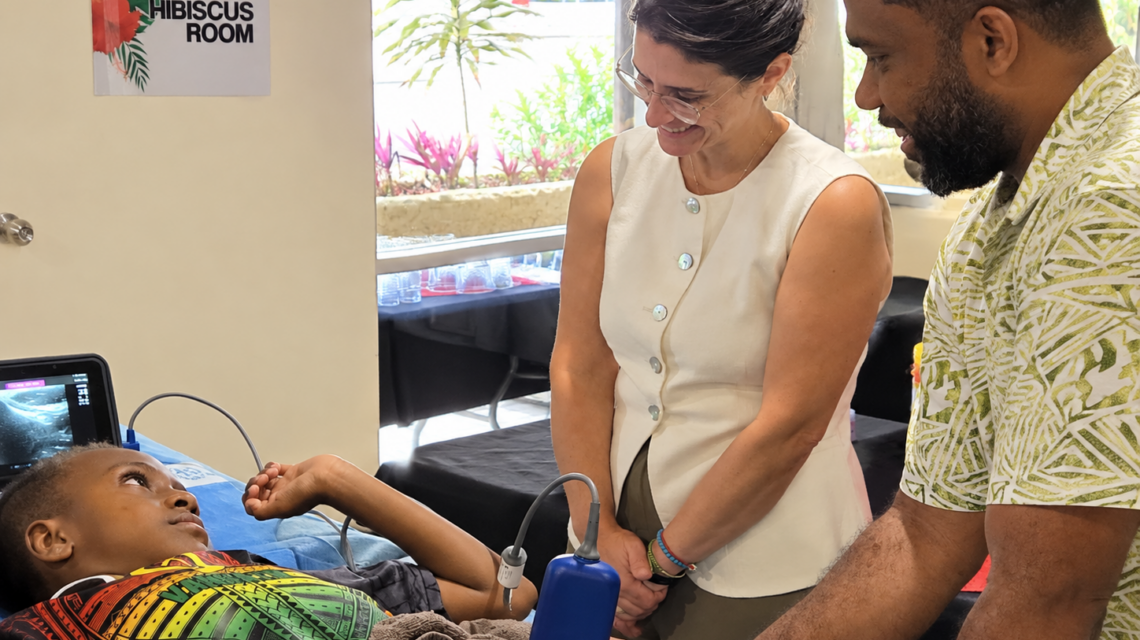
A delegation of specialists in pediatric emergency medicine and pediatric intensive care from Jerusalem’s Hadassah Medical Center made a historic first visit to Vanuatu in September.
The delegation, part of Hadassah Medical Center’s “Tevel” program, was led by Prof. Saar Hashavya, Director of Hadassah’s Department of Pediatrics and Deputy Director of Hadassah Ein Kerem, in cooperation with Israel’s Ministry of Foreign Affairs. The delegation is part of the Medical Center’s “Tevel – Children” program, which works to strengthen local pediatric healthcare capacity through long-term partnerships with health systems seeking to advance and develop their pediatric services.
Vanuatu, a remote island nation in the heart of the Pacific Ocean, is made up of dozens of islands spread across vast distances. The country faces unique challenges in providing advanced medical care in isolated areas and within a healthcare system operating with limited resources.
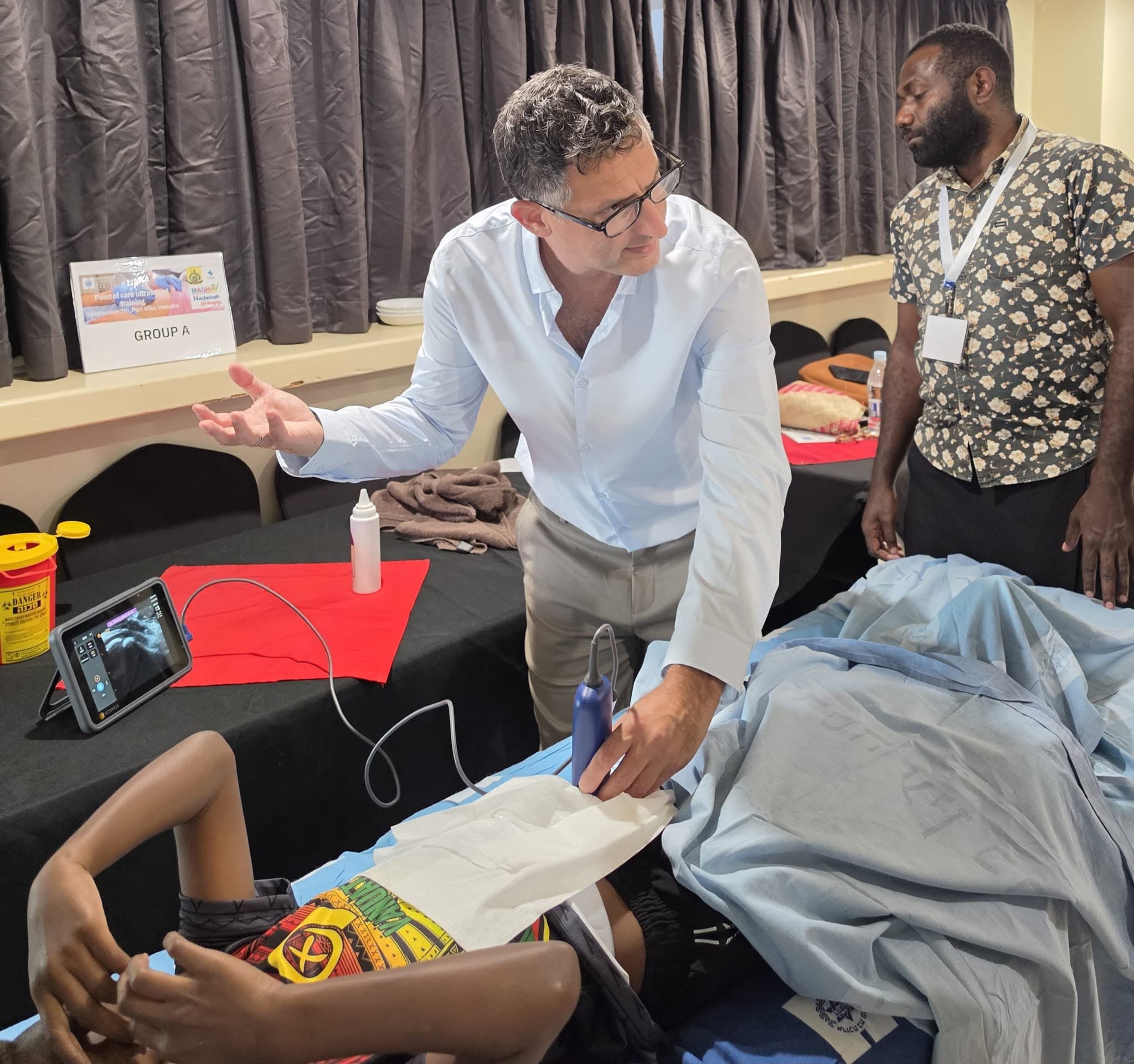
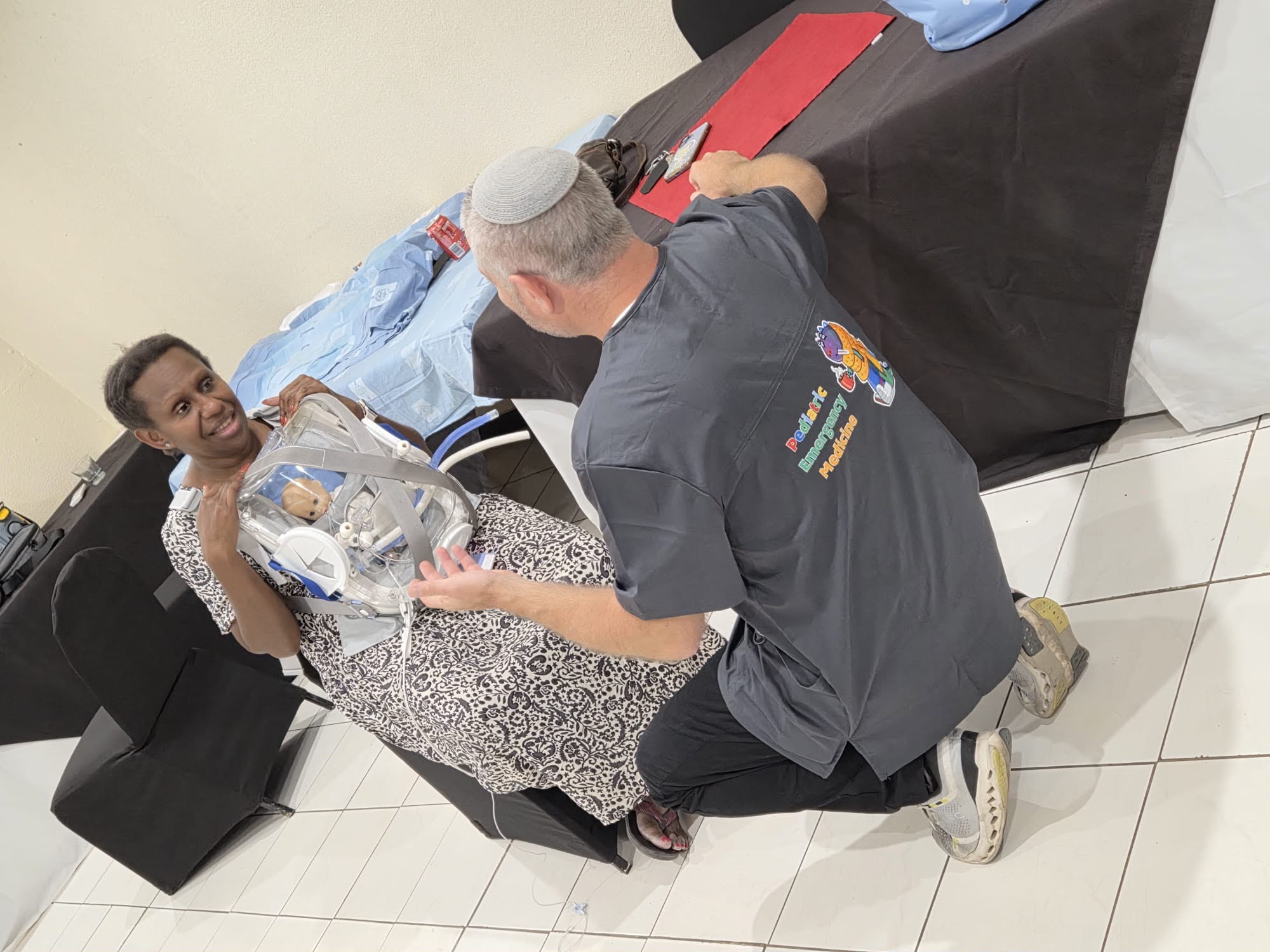
The Hadassah delegation traveled thousands of miles to share knowledge and expertise with their colleagues in Vanuatu and provide training in point-of-care ultrasound (POCUS) in emergency settings, pediatric emergency medicine, and the medical transport of critically ill children.
Medical transport is particularly important in an island nation, where safely transferring a sick child from a remote location to a medical center capable of providing advanced care can pose a significant medical and logistical challenge—and can, at times, be a matter of life and death.
The training, held at Vanuatu’s central hospital, and was coordinated with the Ministry of Foreign Affairs and the Israeli Embassy in Suva, combined classroom-based learning with extensive hands-on practice, including simulations and virtual reality training. For the local medical teams, this was their first opportunity to experience virtual reality technology as part of medical training.
The training session was opened by Vanuatu’s Minister of Health, who expressed his enthusiasm for the initiative. The visit also received extensive coverage in the local media. Word of the training spread quickly, and within a short time, the number of local healthcare professionals seeking to learn from the Hadassah team and experience advanced medical technologies had doubled.
Some of the technologies introduced as part of the training are based on innovative solutions developed by Israeli startup companies.
Building Local Capacity Through Long-Term Partnership
Hadassah’s “Tevel – Children” program has operated primarily in Africa to date. Led by Prof. Saar Hashavya and a broad team of pediatric specialists from Hadassah, the program seeks to strengthen local pediatric healthcare capacity through long-term partnerships with health systems in countries seeking to advance and develop their pediatric services.
At the heart of the program is the belief that medical cooperation is not simply about transferring knowledge from one country to another. It is about mutual learning, capacity building, and creating sustainable professional and human connections.
At a time when Israel’s image faces significant challenges on the international stage, Hadassah’s teams seek to bring to the other side of the world a different face of Israeli society and medicine: excellence, innovation and advanced medical care—but above all, friendship, partnership and a commitment to helping people simply because they are human, regardless of religion, race, gender or origin.
The delegation, which traveled in cooperation with Israel’s Ministry of Foreign Affairs, also brought with it some of the fruits of Israeli innovation, incorporating a range of advanced technological tools and capabilities into the medical teaching and training sessions.
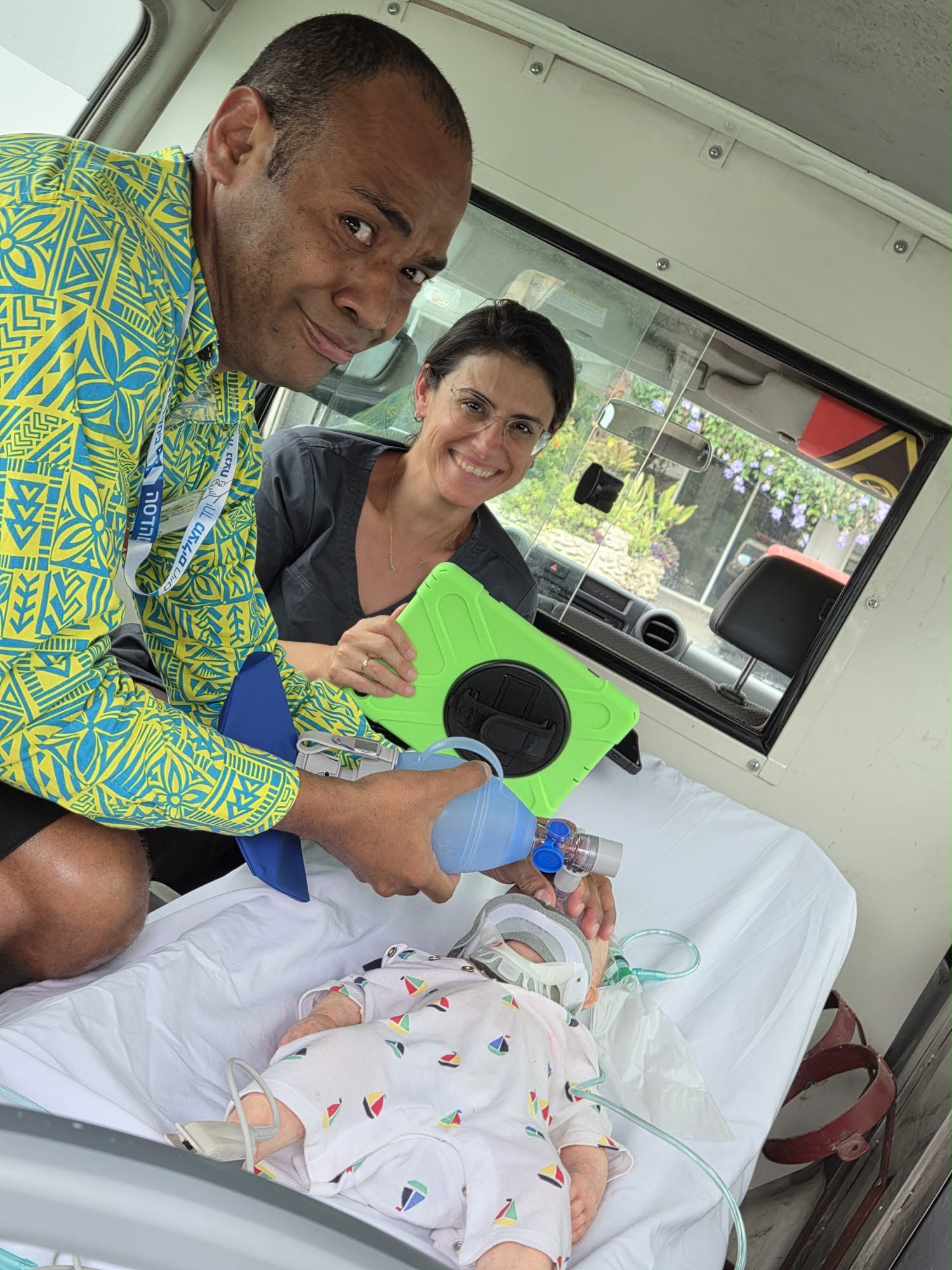
The goal is not simply to arrive, teach and return home. It is to build a lasting bridge of knowledge, medicine and partnership—one that will remain long after the delegation has returned to Israel.
Photo credit: Hadassah Medical Center Spokeswoman’s Office.